Beyond the Socket: How Bionic Skins Is Changing Prosthetic Comfort
Podcast: Play in new window | Download (Duration: 1:02:09 — 38.5MB)
Subscribe: Apple Podcasts | RSS | More
Where Science, Innovation, and Personalized Prosthetics Meet
to Give Amputees Their Freedom Back
What if the biggest breakthrough in prosthetic technology isn’t a new knee, ankle, or robotic foot, but something much closer to our bodies, the socket itself?
As an above-knee amputee approaching eight years on this journey, I can tell you firsthand that the most advanced prosthetic leg in the world means nothing if your socket doesn’t fit comfortably. Pain, frustration, skin issues, and the constant mental load can turn an ordinary day into an exhausting battle.
This week on the BAWarrior Podcast, I’m welcoming back Eric and Devin from Bionic Skins, a Massachusetts-based prosthetics technology company with roots in MIT’s research labs and the work of Hugh Herr. Their mission? To bring more science, precision, and personalization into prosthetic socket design.
And what they’re developing could change how amputees experience mobility.

Dr. Hugh Herr, MIT Professor of Media Arts and Sciences; Thomas D and Virgina W. Cabot Professor
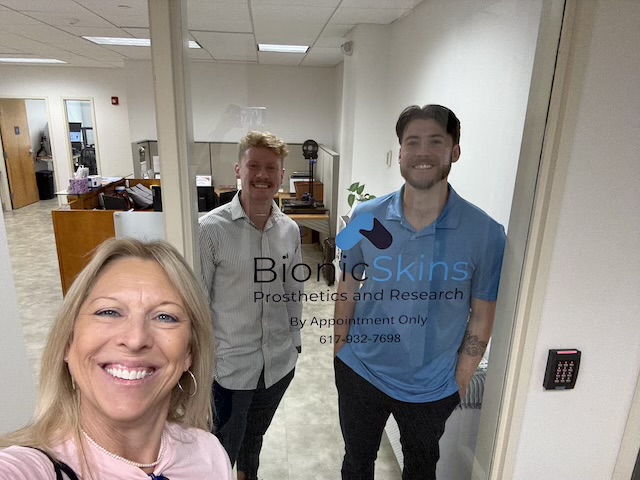
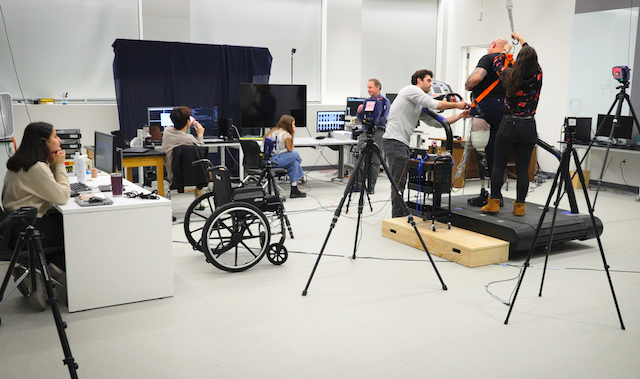
My visit to Bionic Skins with Eric (L) and Devin (R)
Taking Prosthetic Fit From the Outside In, or Rather, the Inside Out!
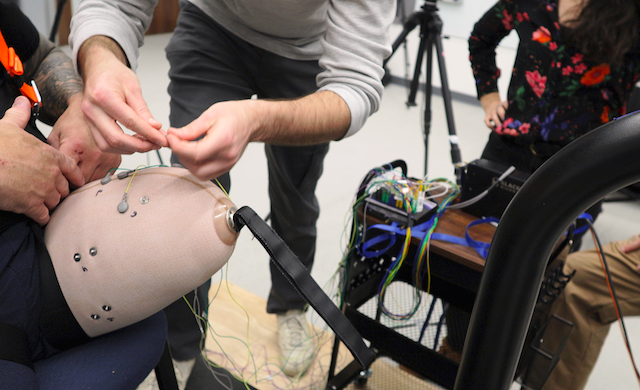
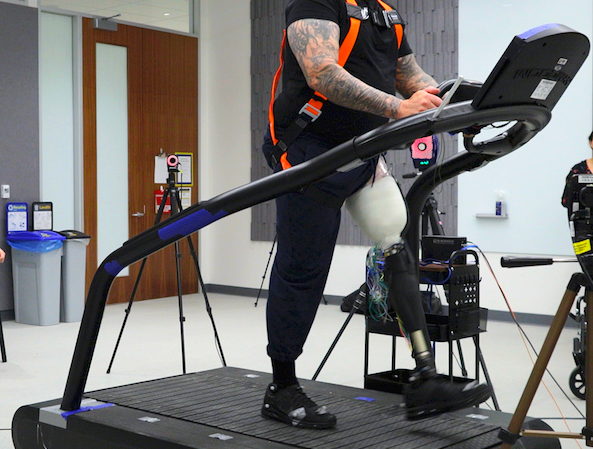
Traditional socket fitting often relies on casting the outside of a residual limb. Bionic Skins takes a different approach, using CT imaging, advanced computer simulations, and 3D printing to understand what’s happening beneath the skin.
By examining bone structure, soft tissue, and pressure distribution, they’re developing individualized socket and liner interfaces designed to improve comfort and reduce problematic pressure points.
We discuss why this matters, especially for amputees who have struggled through countless socket adjustments without finding lasting relief.
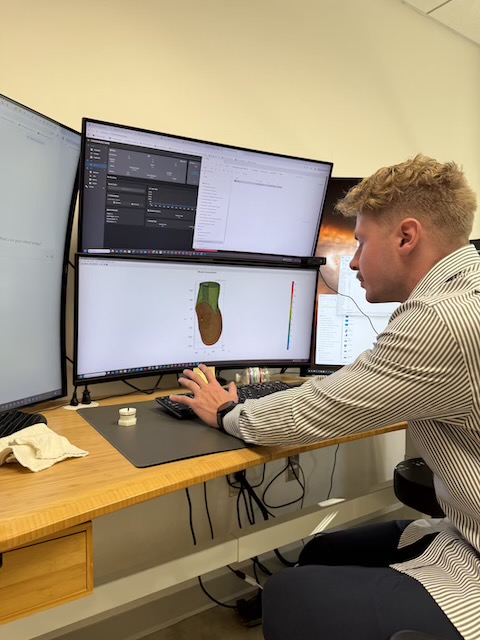
The science of it and how Eric uses scans and metrics to create the specialized fit for each patient.
Bringing Technology to Amputees Nationwide
One of the most exciting developments is Bionic Skins’ nationwide ordering portal.
You no longer have to travel to Massachusetts to explore their technology!
Through this program, below-knee amputees can work with their existing prosthetist, who can collaborate with Bionic Skins to create a personalized socket interface.
We also discuss their plans to expand into above-knee prosthetics, a development I’m personally excited to follow!
The Future of Prosthetic Innovation
Our conversation goes beyond socket comfort. We explore advances in suspension systems, individualized soft-tissue modeling, and the concept of digital memory, which allows Bionic Skins to retain fitting information as an amputee’s residual limb changes.
We also dive into their collaboration with MuscleMetrics and early-stage research involving magnetic implants that may eventually allow prosthetic ankles to respond more naturally to muscle movement.
Imagine reducing the constant mental calculations involved in walking, navigating stairs, or stepping off a curb.
That’s the future we’re discussing.
But what touched me most were the stories of amputees whose lives changed when they finally experienced greater comfort. From a mother who regained mobility and independence to a longtime amputee who discovered a different level of fit after decades of searching, these stories remind us why innovation matters.
Because prosthetic comfort isn’t simply about walking. It’s about having the freedom, confidence, and energy to live life amplified.

If you’re an amputee struggling with socket comfort, don’t stop asking questions or exploring your options. Visit Bionic Skins to learn more about their technology and how you or your prosthetist can start a conversation.
And if this episode resonates with you, please share it with another amputee, prosthetist, or someone passionate about adaptive technology.
Together, we can advocate for innovations that help us move beyond simply getting through the day and toward truly living.
And as always,
Be Healthy,
Be Happy,
Be YOU!!!
Much Love,