Tag: Limb loss awareness month

Finding Strength in Ohana: Faith, Family, and Healing

Finding Strength in Ohana: Faith, Family, and Healing

Kainoa Spenser’s Road to Recovery

Week 2: Survivors to Warriors
 

April is Limb Loss and Limb Difference Awareness Month, and this episode of BAWarrior Podcast is one that will stay with me for a long time. In this powerful and deeply emotional conversation, I sat down with Kainoa Spenser, someone whose story reflects the very heart of what it means to move from surviving to truly living as a warrior.

Kainoa and I first connected while I was facing my own amputation journey, so having him on the podcast felt especially meaningful. What makes his story so extraordinary is not just the severity of what he endured, but the way he speaks about it with honesty, humility, faith, and wisdom beyond his years. Kainoa is a quadruple amputee, having lost both legs and most of his fingers after a devastating and sudden illness in 2017 while he was away at college.
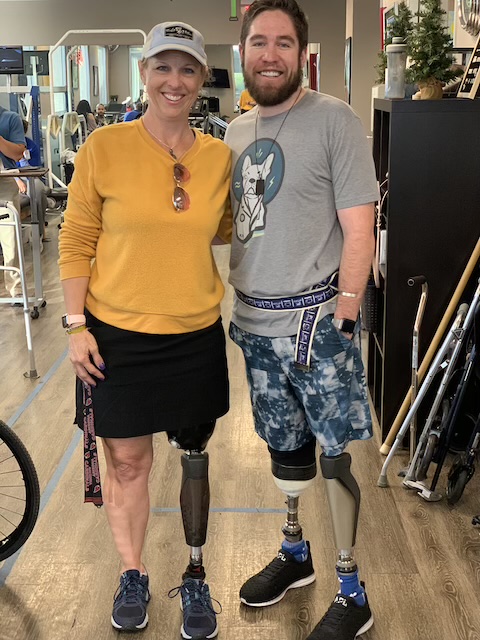
 

Meeting Kainoa for the first time at PT!


Before everything changed, Kainoa was a young man full of curiosity, ambition, and heart. He was studying international affairs, deeply involved in school, active in sports, passionate about history and philosophy, and rooted in the values of family and community. Those Hawaiian values of ohana—that no one gets left behind or forgotten-were already woven into who he was long before tragedy struck. And in many ways, those same values became part of what carried him through the darkest season of his life.

During our conversation, Kainoa shared the terrifying progression of his illness, from feeling sick during finals week to being misdiagnosed, flown home in critical condition, and rushed into emergency care where his health rapidly deteriorated. A strep infection had entered his bloodstream and lungs, leading to septic shock and necrotizing fasciitis. He spent weeks in a medically induced coma, and when he woke up, his life had changed forever. Some of the amputation decisions were made while he was unconscious, leaving his parents to make impossible choices. Other decisions, including the loss of his fingers, required his own consent in the middle of unimaginable pain and confusion.

What impacted me most was not only the heartbreak of his story, but the courage with which he spoke about the mental and emotional battle that followed. Kainoa was honest about the grief, the fear, the thoughts of being a burden, and the moments where he wondered if the weight of it all might break him. He spoke about missing the things many people take for granted-interlocking fingers with someone you love, standing in the shower, feeling sand beneath your feet. Those losses are real, and he did not try to minimize them.

But what also came through so clearly was this: healing does not happen in isolation. Kainoa’s story is a powerful reminder that community matters. Family matters. Faith matters. The right people around you can become the bridge that carries you from despair to hope. Through meeting other amputees, witnessing independence modeled before him, leaning into his faith, and receiving overwhelming support from loved ones and community, he slowly began to shift. He began to see that this was not the end of his story.

Today, Kainoa is thriving. He finished his education, worked in high-level public service roles, became a homeowner, regained independence, and is now continuing his education at Thunderbird School of Global Management. He is living proof that resilience is built in layers, in waves, and through the willingness to keep turning the page.

This episode is a reminder that even in our deepest pain, there is purpose. Even in the valley, there is light ahead. Kainoa’s journey is not just about limb loss. It is about faith, perspective, gratitude, community, and discovering that life can still be beautiful, meaningful, and impactful after everything changes.

Make sure to Like, Share and Subscribe so you catch more inspiring stories, like Kainoa’s in the coming weeks.

And as always,

Be Healthy,

Be Happy,

Be YOU!!!

Much love,

 

Statistics and Realities of Limb Loss

Statistics and Realities of Limb Loss

Life Behind the Numbers of Amputees and Limb Difference


April is Limb Loss and Limb Difference Awareness Month, and this year on the podcast, I’m doing something that means so much to me. Instead of focusing only on my own story, I’m opening the door for other amputees to share theirs. That has become a tradition for me over the last five seasons, and this year I’m building the entire month around one powerful theme: Survivors to Warriors. I truly cannot wait for you to hear these interviews, because the young adults I have coming on embody courage, resilience, grit, and hope in a way that will leave you inspired. Their stories are raw, real, and deeply moving, and I’m honored to call each of them my friend.

As I prepared for this month, I wanted to begin with something eye-opening: the statistics. Because the truth is, before I became an amputee seven years ago, I hardly ever noticed amputees around me. Maybe once in a while I’d see someone, but it felt rare. Now, just like when you buy a certain car and suddenly see it everywhere, I notice amputees much more often. Even so, the numbers tell me I should be seeing even more. And that is what really stopped me in my tracks.

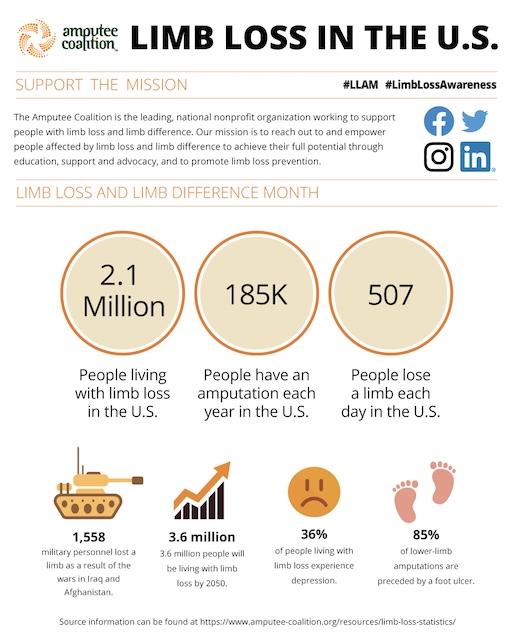
Worldwide, someone loses a limb every thirty seconds. There are tens of millions of people around the world living with limb loss, and what absolutely breaks my heart is that up to ninety percent of them do not have access to prosthetic care. Ninety percent. That number is staggering. And it hits close to home for me because I know what it feels like to have the hope of mobility threatened.

Amputee Coalition Statistics used on American Endovascular & Amputation Prevention site, April 25, 2022


Before my elective amputation, I was told everything would be covered. I did my homework because I knew prosthetics were expensive, and I needed the reassurance that if I moved forward with surgery, I would have access to the leg I needed. Then, about a month after surgery, we filed the insurance paperwork and I was denied. I can tell you without hesitation that those four weeks were some of the hardest weeks of my life. In the grand scheme of seven years, it may look like a blink. But in the moment, it felt like everything. I had dreams, goals, and visions of what life could be after amputation, and suddenly an insurance company was telling me no.

So I fought. Every single weekday, I called. I kept climbing the ladder, talking to the next person and then the next. I refused to sit back and wait for someone else to decide my future. That season demanded every ounce of emotional and mental strength I had. I had to advocate for myself when I was exhausted, scared, and uncertain. And when I think about the reality that so many people around the world never get that access at all, it is heartbreaking.


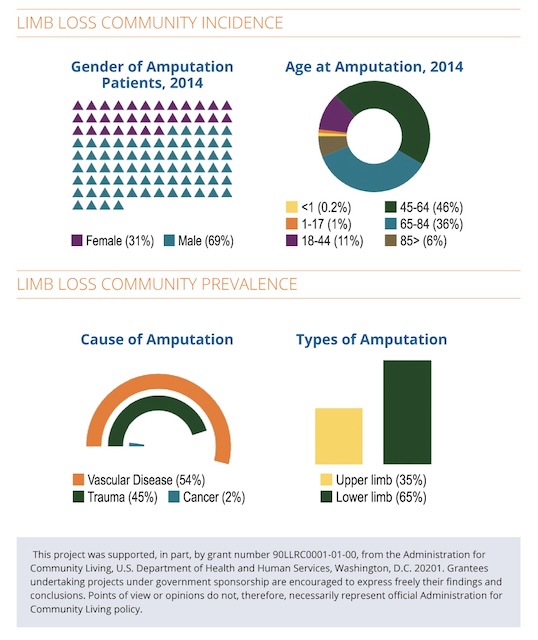
Amputee Coalition Statistics used on American Endovascular & Amputation Prevention site, April 25, 2022


The leading causes of limb loss are also telling. Vascular disease, including diabetes, makes up the largest percentage. Trauma is close behind, including accidents and injuries. Then comes cancer, though at a much smaller percentage. My own amputation came after years of surgeries following a karate injury, and eventually I made the deeply personal decision to amputate. Elective amputation is not an easy road, and whether amputation happens in an instant or after years of medical struggle, both journeys carry their own kind of trauma.

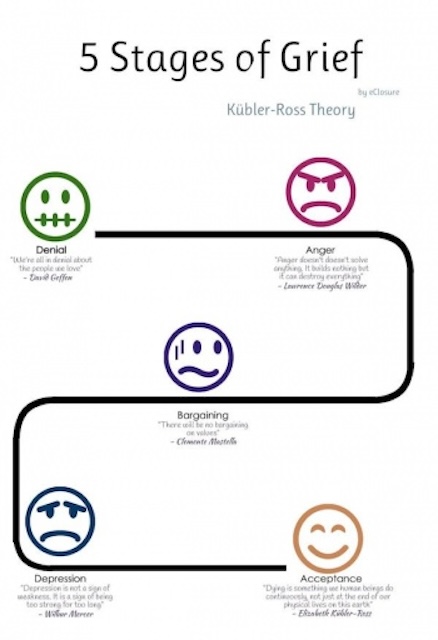
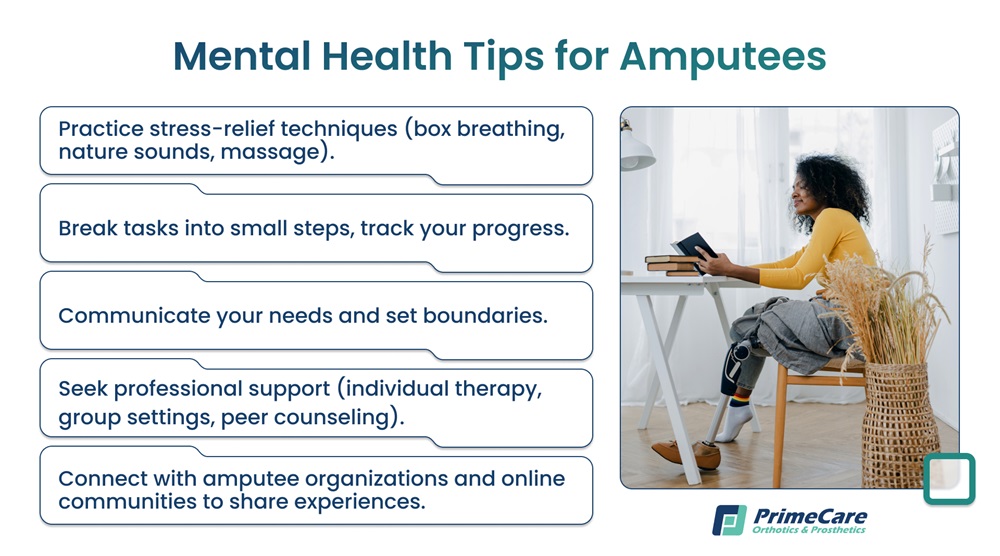
That’s the part people do not always see. Yes, limb loss is physical. It is visible. But the emotional and mental toll can be just as life-altering. Depression, anxiety, PTSD, fear, isolation, and loss of confidence are very real parts of this journey for so many amputees. People may see someone walking on a prosthesis and assume they are doing fine, but they do not always see the inner battle. They do not see the fear of falling, the anxiety of being watched, the struggle to trust your body again, or the grief of trying to figure out who you are now.


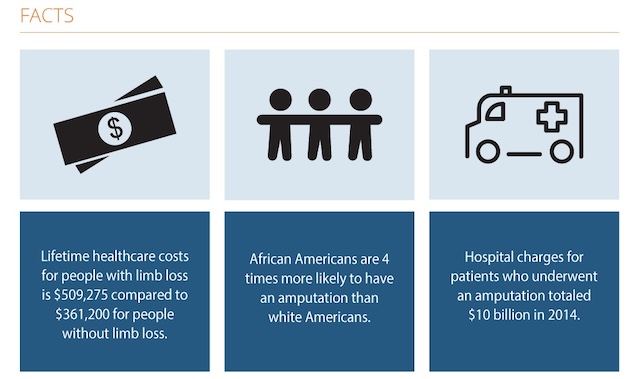
Amputee Coalition Statistics used on American Endovascular & Amputation Prevention site, April 25, 2022


Physiopedia: The 5 Stages of Grief and Loss; Axelrod, J. September 26, 2018, https://psychcentral.com/lib/the-5-stages-of-loss-and-grief/


Prime Care, Blog by Eddie Zepeda. Published, January 20, 2025


And then there is phantom pain, something many amputees know all too well. Phantom pain and sensations can range from mild to absolutely overwhelming. It can feel like burning, stabbing, cramping, stinging, or relentless discomfort that comes out of nowhere and hits like a truck. It is one more reminder that the amputee journey is layered, complicated, and often invisible to the outside world.

That is exactly why this month matters so much to me. I want these interviews to shine a light on the real lives behind the statistics. I want you to hear from young adults who have endured the unimaginable and are now learning how to rise, rebuild, and become warriors. Their stories deserve to be heard, and I know they will inspire anyone who listens.

So as we step into Limb Loss and Limb Difference Awareness Month, I hope you’ll join me. Like, share, subscribe, and most of all, listen. These stories matter. These lives matter. And together, we can bring more awareness, more compassion, and more hope to a community that deserves to be seen.

And as always,

Be healthy,

Be happy,

Be YOU!!!


Much love,

That’s A Wrap!

That’s A Wrap!

Loss/Limb Difference Awareness Month 2025


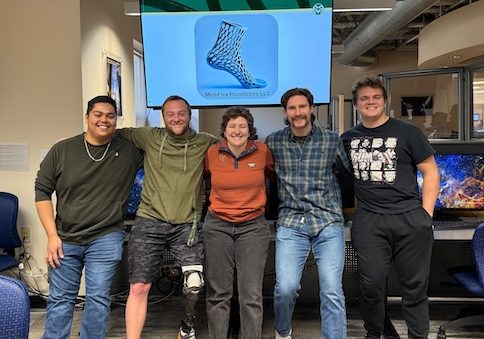
Garrison Hayes and Eric Gutierrez-Camacho
Colorado State University

John McCollough: MIT
Ophelie Herve: UCLA
Mira Mutnick, Jake Kanetis, and Marty Kilbane
Colorado State University

Dan Levine: MIT

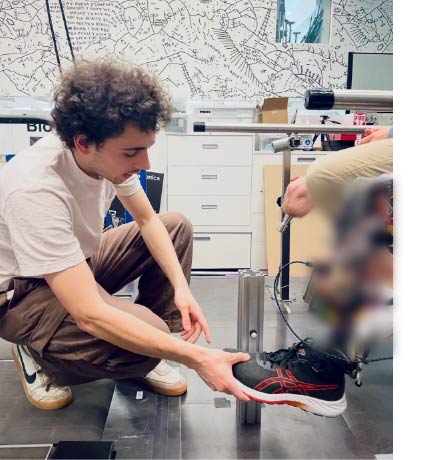
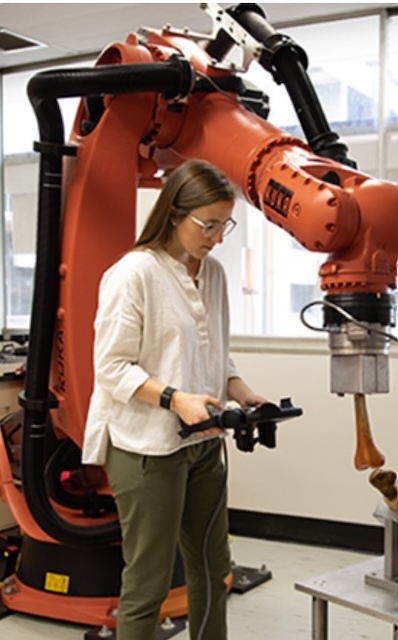
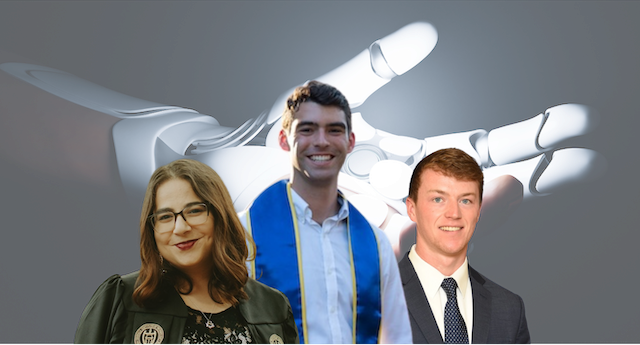
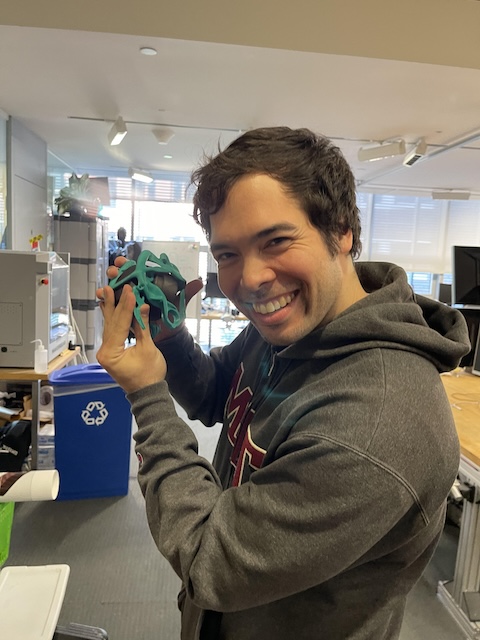
As April comes to a close we say a huge thank you to all of the university students ts who came on to share what they have been working on, in the fields of mechanical and biomedical engineering, robotics, and media arts and sciences. All of these amazing students have a passion for assisting and improving the lives of people in the amputee community with their genius and creative enhancements to prosthetics, sockets, surgical procedures and research.

I cannot thank them all enough for caring so deeply for our community and for working so hard to improve it.

As this month closes out I want to entice you all to subscribe to my channel as next week we begin to explore phantom pain.

I have a professor from Harvard coming on to talk about his study into how the mind works, and how it can be used as a tool to combat phantom pain. Very intriguing conversation and maybe a few cues for us amputees to use to begin taking charge of our bodies without the use of drugs.

Please make sure you stay tuned for future episodes!

hHave a very blessed and wonderful week,

And as always,

Be Healthy,

Be Happy,

Be YOU!!!


much love,

The Future is Now: Part 3 of 5

The Future is Now: Part 3 of 5

Limb Loss Awareness Month

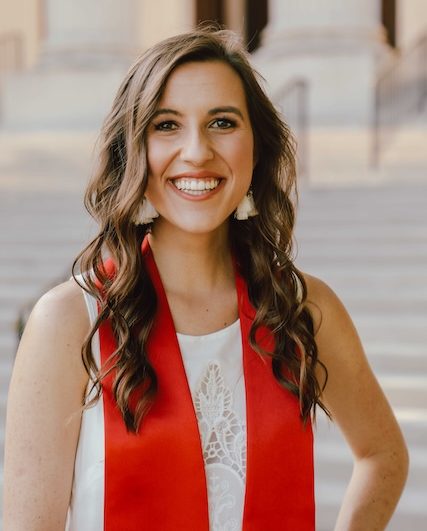
UCLA: Ophelie Herve


As we come into our third week of April Limb Loss/Limb Difference Awareness month I am so excited to have a female voice in the engineering program from UCLA on our podcast today.

Ophelie was  born in France and came with her family here to the United States at an early age. In high school she reflects on watching the news when the Boston Marathon was bombed and she saw peak athletes, within 24 hours, become wheelchair bound. As an athlete, herself, this event created a desire to help and  gave her the direction she needed to jump into engineering and working in prosthetics for her undergraduate and Masters program at SMU.

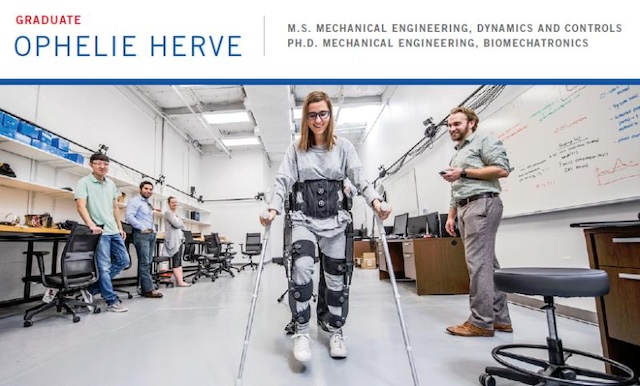
Ophelie using an exoskeleton that is a power device used to help paralyzed individuals walk.


From there she turned her attention to injury prevention, and found interesting research on the female body and the how and when training can sabotage us by putting us at high risk for injury and when we will have a peak performance in the gym.

Using a robotic arm to replicate the knee joint in her studies on injury prevention.


This week I wanted to delve into the topic of how the female body is different and how as amputees we need to protect our sound limb for the long haul. We have always been so amazed by the newest prosthetics and bionics to come out into the world, and it is a very competitive field, but without research we don’t have the information to make technology better for the human body

Her research is fascinating and goes deep. We joked about the rabbit holes she went down as she began this research, but it was her unique perspective as a female athlete (and one who has injured herself playing soccer), coupled with her research on our female bodies and cycles that we really dove into some extraordinary conversations about injury prevention, especially for women who are down to one sound limb. As a female amputee, I can tell you that I have thought about this often, and what would life look like if I injured my “good leg”. That has also been a topic many times in my ladies’ chat group.


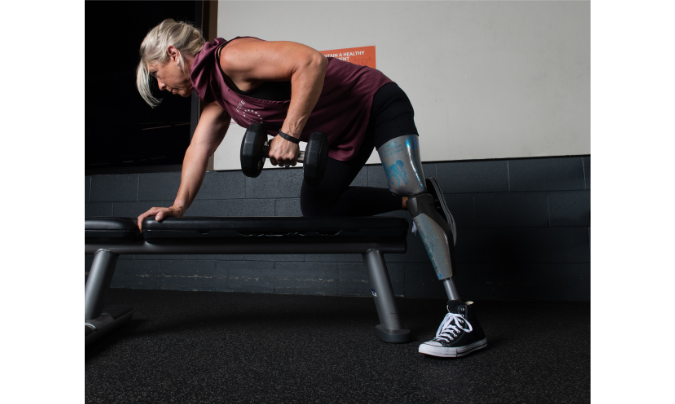
Working out at the right times of the month help protect our sound limb.


How we workout, eat, and rest all help play a part in stabilizing our sound limb, and when different cycle changes throughout our lives make a difference in each of those aspects.

This was great to learn about as the world of sports and nutrition tend to clump us in the same  workout and nutrition regiment as our male counterparts, without regards to our different hormones and biological differences.

I hope you enjoy hearing about Ophelie’s cutting edge research and Master’s project as she explains in greater detail some findings and how that will affect us as female amputees and athletes.

Please make sure you give her some love and Like, Share and Subscribe!

We have 2 more weeks of Limb Loss/ Limb Difference Awareness month, which means I have 2 more students who have dedicated their college journey to the betterment of the amputee community. You don’t want to miss this!

Have a beautifully blessed week ahead,

And as always,

Be Healthy,

Be Happy,

Be YOU!!!


Much love,
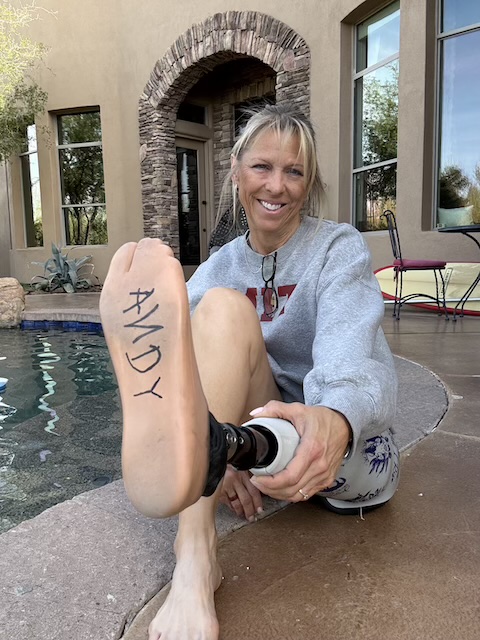
 

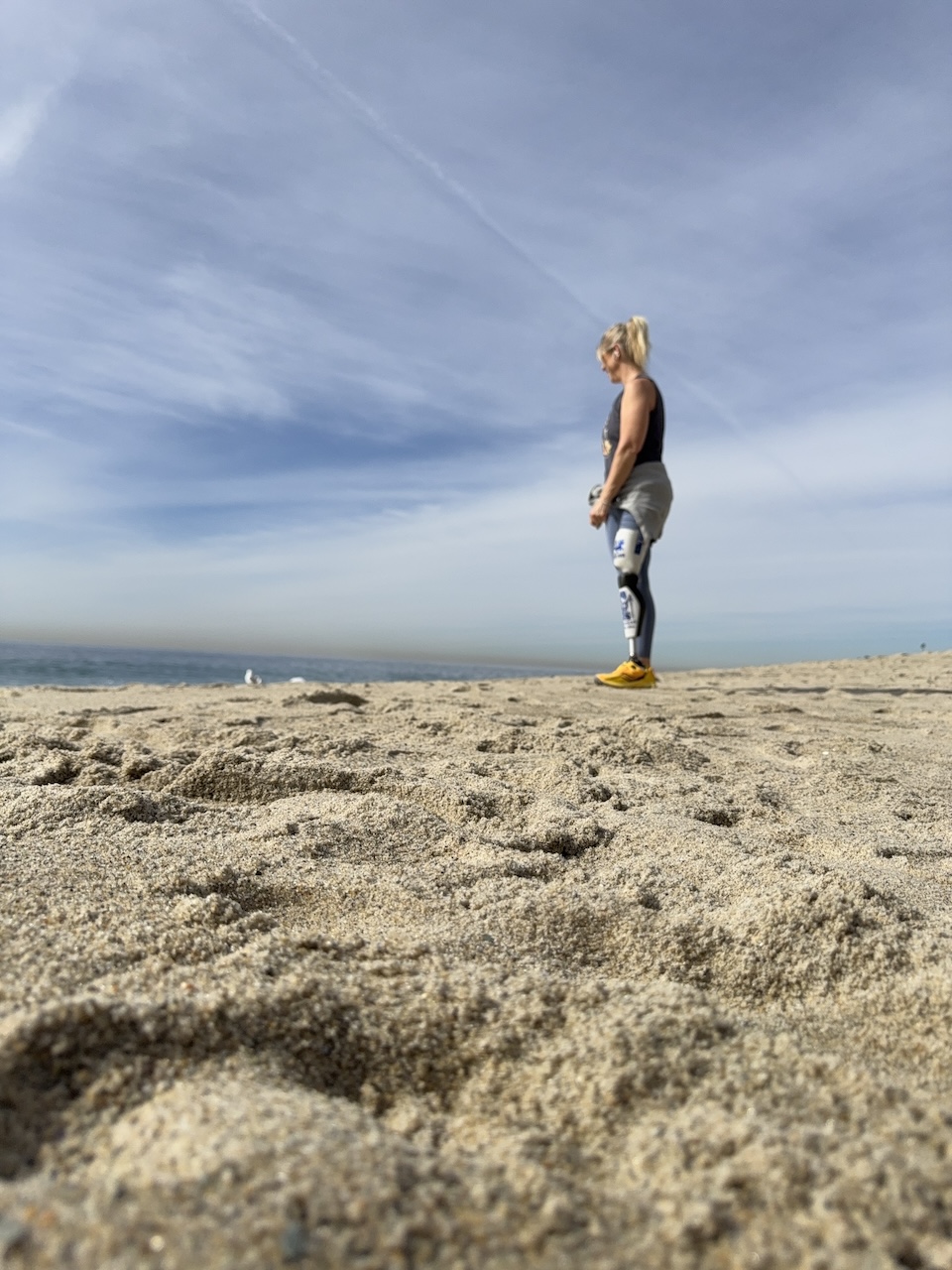
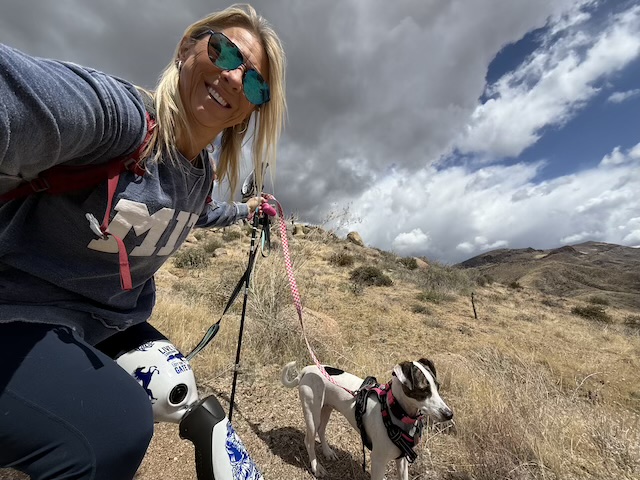
Hiking with my pups keeps my sound leg strong and health for the long haul.
Keep moving!


Transparency

Transparency

The Truth About Being An Amputee


Not everyday is a picnic.

This is true for everyone around the world, but when you talk to amputees who lost their limb because of an accident, disease, war, or electively, the operation is just the beginning, not the finale.

Once we heal and begin to transition into a prosthetic- wearing person we are just then beginning to experience what amputee life is like.

I started this podcast, not because I wanted to hear myself speak (I hate hearing my own voice!), but because I wanted to be the voice of reality, and transparency for this community. I wanted to be real, no matter what that was going to look like.

The past 2 weeks have been very hard for me, emotionally, mentally, and physically. Even though I have enjoyed traveling with my family, skiing and walking the Vegas strip, my residual limb has been struggling to fit properly into my skin fit socket. When the fit isn’t right it swells and becomes hard and very sore. Then through the night it settles down a little but then the next day I try to put my prosthetic on only to have an ill fit again, making it worse throughout the day.

Mind you, I have had this socket for over a year and I haven’t experienced this, then after being at higher elevations, flying, skiing without it on, I find myself not fitting well.

There’s not much to do about it but hope that I “normalize” again, soon, before it gets any worse.

This is the life of an amputee.

Some of us look like it’s all roses, but were have our days and even weeks (and some struggle for months) but we can hide it well.

Transparency is important to me because so many amputees that I’ve talked to are so frustrated because the ones they see on social media are living life and doing so well (you know, only showing the best moments) and they are not. They, and maybe YOU are one of them, that can’t figure out how you will ever wear your prosthesis or walk in it. If you’ll ever be comfortable again or without pain.

It is not an easy journey, but you can succeed in this life.

You have to understand the reality of your new circumstance and what it entails, really, before you can just be running along in your prosthetic leg. it doesn’t happen over night. it takes practice, patience, and a lot of faith.

You will feel knocked down at times, but you must get up again and keep trying, keep pushing forward.

Don’t give up….

This too shall pass and you will find your way through the challenges and struggles.


I have a simple task and request for this week.

Next month, April, is Limb Loss/Limb Difference Awareness Month and I have a full month of interviews with AMAZING individuals who have spent time creating, inventing, and innovating designs and products to help our amputee community.

You really don’t want to miss out on an episode in April so my CTA is simple:

Subscribe to my podcast and my YouTube channel (BAWarrior360) so you don’t miss any of these special people and the work they are doing. Plus, please share my podcast with someone you care about who you think could benefit from some positivity and encouragement as they navigate amputation or even medical circumstances that they struggle with.


That’s it! Subscribe, Like, Share!

I hope to continue to grow my audience so I can help and motivate more and more people in the world.

Thank you, warriors, from the bottom of my heart!

Have a beautiful and blessed week until next time!


And as always,

‘Be Healthy,

Be Happy,

Be YOU!!


Much love,


Me and my girl ♥